What Is the History of Pearls?
Short answerPeople have prized natural pearls as symbols of wealth and status for thousands of years, fishing them in the Persian Gulf, off Sri Lanka, in China's rivers and lakes and in Europe's rivers, and later in the Americas. Japanese pioneers produced whole cultured pearls around the start of the twentieth century. Cultured pearls became commercially important in the 1920s, as natural pearl production declined, and culturing spread worldwide from the 1930s on.
The history of pearls is two stories: thousands of years of natural pearls fished from the sea and rivers, and little more than a century of cultured pearls.
Natural pearls in the ancient and early modern world#
People have coveted natural pearls as symbols of wealth and status for thousands of years, and royal families and wealthy citizens in Asia, Europe and elsewhere passed them down the generations.1 Until 1492, some of the main sources were the Persian Gulf, the waters off Sri Lanka, the rivers and lakes of China and the rivers of Europe.1 Pearls found in the Americas, off present-day Venezuela and Panama, raised demand in Europe after Columbus’s voyages.1
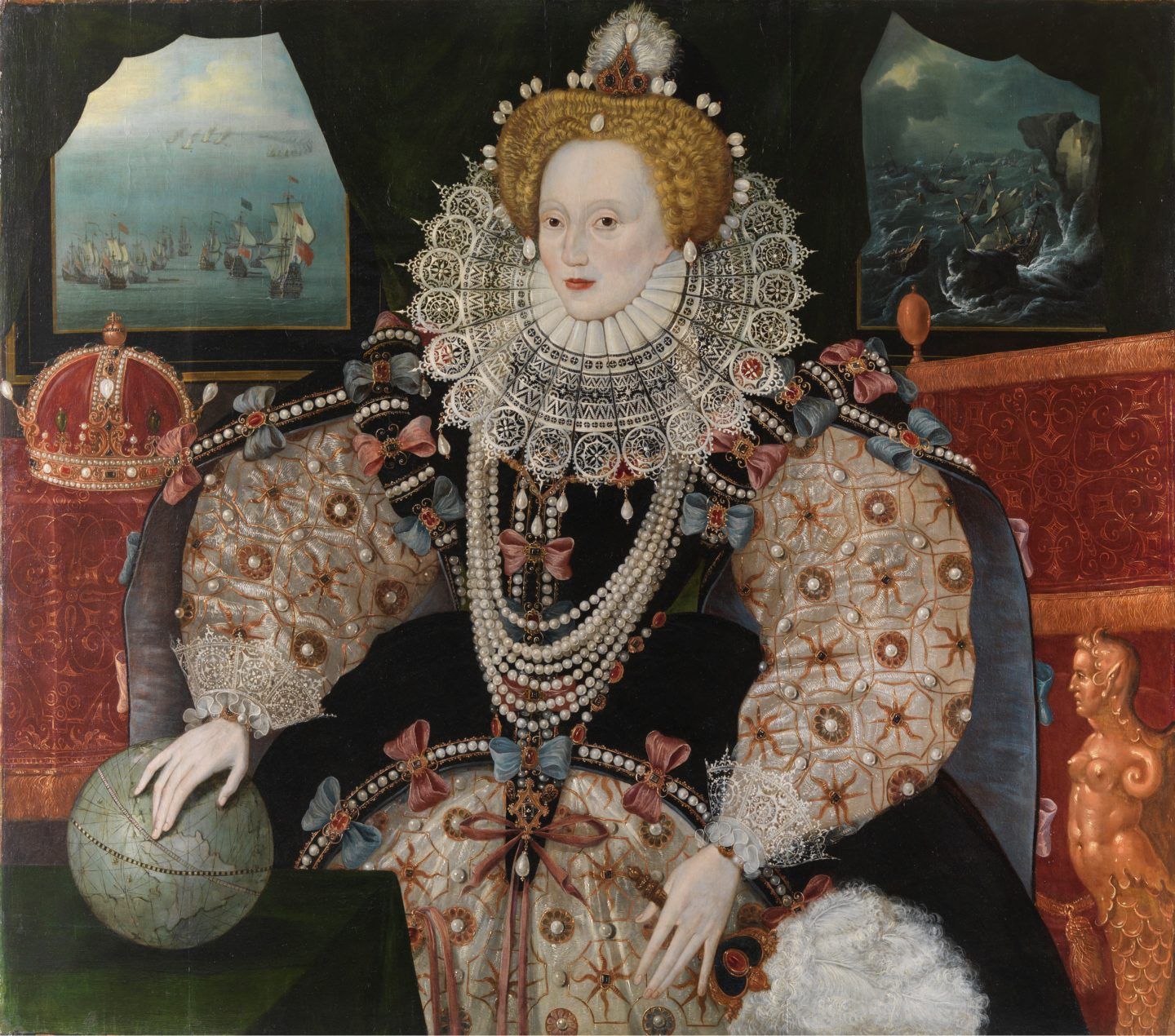

Pearls also gathered meaning. Many cultures linked them with the moon because of their round shape. In ancient China pearls were believed to protect against fire and fire-breathing dragons, and in Europe they stood for modesty, chastity and purity.1 The page famous pearls tells the stories of some celebrated pearls.
The first cultured pearls#
The first steps toward culturing pearls were taken in China hundreds of years ago, and Japanese pioneers produced whole cultured pearls around the beginning of the twentieth century.1 Kokichi Mikimoto grew hemispherical cultured pearls in 1893,2 and the method for whole, round cultured pearls, with a bead placed in the oyster’s gonad, came from Tatsuhei Mise and Tokichi Nishikawa.3
Cultured pearls became commercially important in the 1920s, at about the time natural pearl production began to decline.1 From the 1930s through the 1980s, pearl culturing diversified and spread to countries around the world.1 The page who invented cultured pearls tells the story in full.
Key dates#
A few of the key dates are below, each dated as precisely as its sources allow. The pearl timeline has every dated event.
- About 8,500 years ago: The oldest known pearl ornaments. In 2019, archaeologists reported pearls used as adornments in Baja California Sur, Mexico, radiocarbon dated to 8,500 years old, the oldest reported so far.4
- 1498: Columbus meets people wearing pearls on his third voyage. On his third (1498) and fourth (1502) voyages, Christopher Columbus met people adorned with natural pearls. The pearl sources he found, in present-day Venezuela and Panama, raised demand in Europe.1 5
- 1893: Kokichi Mikimoto grows his first cultured pearls. Kokichi Mikimoto successfully cultured pearls in Japan. They were hemispherical (half) pearls.2 6
- 1907: The technique for whole, round cultured pearls is developed. CIBJO dates the technique for spherical, whole cultured pearls to 1907. A 2007 Gems & Gemology review credits Tatsuhei Mise and Tokichi Nishikawa with the basic method still used for bead-cultured pearls, a bead inserted into the gonad with a piece of mantle tissue.2 3
- 1921-05: Round Japanese cultured pearls surprise the London trade. A London evening paper reported that spherical Japanese pearls with mother-of-pearl beads at their centers had reached the London market and deceived experienced dealers in Hatton Garden.7
- 1930s: The Gulf's natural pearl trade contracts. From 1850 to 1930 the Persian Gulf supplied perhaps 70–80% of the world's natural pearls. From the 1930s the natural pearl market contracted, because of the Great Depression, the discovery of oil in the Gulf and the arrival of cultured pearls.2 8
- 1954: South Sea pearl culturing begins at Kuri Bay, Western Australia. Pearls Pty., a venture of Tokuichi Kuribayashi and Alan Gerdau, began culturing pearls in Pinctada maxima at what is now Kuri Bay. A larger bead method let the farm harvest after only 18 months.3
- 1961: French Polynesia runs its first black pearl culturing trial. The government's Fisheries Service ran a trial on Bora Bora with two Japanese firms. It produced good black pearls but had no commercial follow-up; small farms later formed the GIE Poe Rava Nui cooperative, in 1979.3
- 1966: Japan's cultured pearl production peaks. Official Japanese production reached an all-time high of 39,522 kan, or 148.2 tonnes, though some estimates put it far higher, at about 65,000 kan. Sales and production then fell sharply at the end of the decade.3
- 2017-07-18: French Polynesia's pearl law ends the mandatory nacre check. Loi du pays 2017-16 ended the government's mandatory quality control, which had required at least 0.8 mm of nacre since 2005, and made a nacre evaluation voluntary. It defines the Tahitian cultured pearl as naturally colored and untreated.9 10
Start here#
Every page in this section#
- The cultured pearl revolution
How cultured pearls began in China and Japan, and how pearl farming spread around the world.
- Famous pearls
Famous pearls and their stories, from ancient Rome to the present day.
- Pearl timeline
Every dated event in the Learn About Pearls timeline, with filters by period.
References#
- Gemological Institute of America (GIA), Gem Encyclopedia. Pearl History and Lore. Source · Archived copy (accessed 2026-10-25)
- CIBJO, The World Jewellery Confederation (2021). CIBJO Retailers' Reference Guide: Pearls. Source · Archived copy (accessed 2026-10-25)
- Russell Shor (2007). From Single Source to Global Free Market: The Transformation of the Cultured Pearl Industry. Source · DOI 10.5741/GEMS.43.3.200 · Archived copy (accessed 2026-10-25)
- CIBJO Pearl Commission (2025). CIBJO Guides Describing and Classifying Natural and Cultured Pearls, the Producing Molluscs & Responsible Pearling. Source · Archived copy (accessed 2026-10-25)
- CIBJO, The World Jewellery Confederation, Pearl Commission (2026). The CIBJO Pearl Book (Pearl Blue Book) 2026. Source · Archived copy (accessed 2026-10-25)
- Gemological Institute of America (GIA), Gem Encyclopedia. Pearl. Source · Archived copy (accessed 2026-10-25)
- H. Lyster Jameson (1921). The Japanese Artificially Induced Pearl. Source · DOI 10.1038/107396a0 · Archived copy (accessed 2026-10-25)
- GIA staff (2025). Converge 2025 Speaker Presentations. Source · Archived copy (accessed 2026-10-25)
- Assemblée de la Polynésie française (Journal officiel de la Polynésie française) (2017). Loi du pays n° 2017-16 du 18 juillet 2017 réglementant les activités professionnelles liées à la production et la commercialisation des produits perliers et nacriers en Polynésie française. Source · Archived copy (accessed 2026-10-25)
- Chambre territoriale des comptes de la Polynésie française (2021). Rapport d'observations définitives : Politique publique en matière des ressources marines (perliculture), exercices 2015 et suivants. Source · Archived copy (accessed 2026-10-25)
- Written by
- Learn About Pearls editors
- Fact-checked
- Learn About Pearls editors,
- Reviewed by
- Simon,
- First published
- Publisher
- Unique Pearl, a pearl jeweler
Revision history
- : First published. First published
How to cite this page
- APA
- Learn About Pearls editors. (2026). What Is the History of Pearls? Learn About Pearls. https://learnaboutpearls.com/history/
- MLA
- “What Is the History of Pearls?” Learn About Pearls, Unique Pearl, November 4, 2026, learnaboutpearls.com/history/.
- Chicago
- Learn About Pearls editors. “What Is the History of Pearls?” Learn About Pearls. Unique Pearl. Last modified November 4, 2026. https://learnaboutpearls.com/history/.
- BibTeX
@misc{lap-history, title = {What Is the History of Pearls?}, author = {{Learn About Pearls editors}}, year = {2026}, howpublished = {\url{https://learnaboutpearls.com/history/}}, note = {Learn About Pearls, published by Unique Pearl}}
Quoting with attribution and a link is welcome. See how to cite and reuse.